
Morocco! In the 1960s and 1970s, Marrakesh was for some Europeans a kind of nearby version of the great road to Kathmandu — less distant, but with the same promise of difference, spices, slow time, and the feeling of having arrived somewhere far away.
At a time when Western musicians were looking for new sounds and new routes to the East, Morocco was close enough to act almost like a promise of another world. Marrakesh was becoming a gathering place for artists, musicians, and travelers. Famous faces, such as Jimi Hendrix, The Rolling Stones, and Yves Saint Laurent, also visited there.
I admit, I never quite found the courage to travel to Kathmandu at that time. Marrakesh somehow never happened either.
Many years later, I managed to get to India and Nepal despite everything. And much later, I also visited Marrakesh.
I landed at the airport in the middle of the night and set off with my driver to the medina. Narrow streets greeted us when we finally walked around a few tight corners to my riad.
In the morning, I was woken up by the sounds of prayers sung by the muezzin from the nearby minaret. Still enchanted by the mysticism of the Arab world and the exotic smells in the air, I got lost in the narrow streets of the medina.
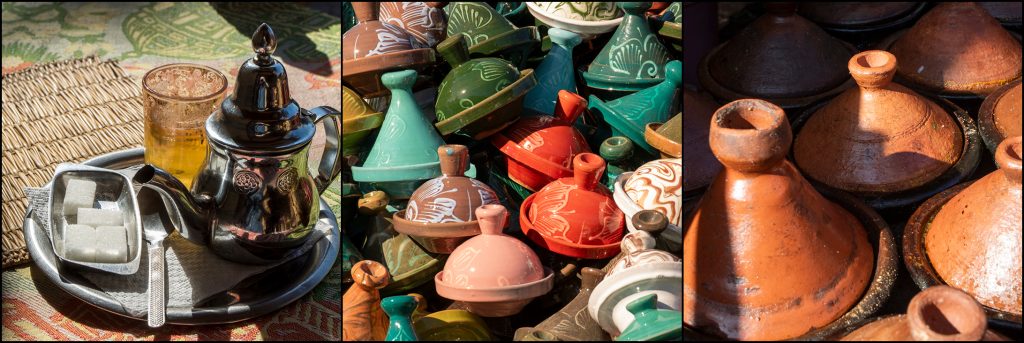
And of course, Moroccan cuisine. Couscous, tagines, full of flavors, colors, and smells. Countless spices in the markets. Stray cats lurking near the butchers, hoping for scraps. And when you wander to the famous Jemaa el-Fnaa square in the evening, treat yourself to roasted sheep’s heads. If you dare.
At noon, I turned into the first food stall and did the obvious thing — ordered chicken tagine. Tagine is both the dish and the pot it is cooked in. The dish is made of earthenware and has a conical lid with a hole on top. Moroccan tagine dishes are basically slow-cooked stews.
Of course, there are countless ways to make one.
A famous description of how to make a tagine comes from Ibn al-Adim (1192–1262), a biographer and historian from Aleppo.
It goes like this — boil the meat and fry with fresh coriander, onions, hot spices, and a little garlic. Then pick out the fennel hearts and cut them in half. Put them over the meat. Pour some broth back over it along with sheep’s tail. Boil until cooked and the broth has been absorbed. That is to say, nothing very complicated.
And as an amateur chef, I decided to cook something that should resemble a chicken tagine. Of course, I don’t have a proper tagine pot, but nothing will go wrong if you prepare the dish in a pan.
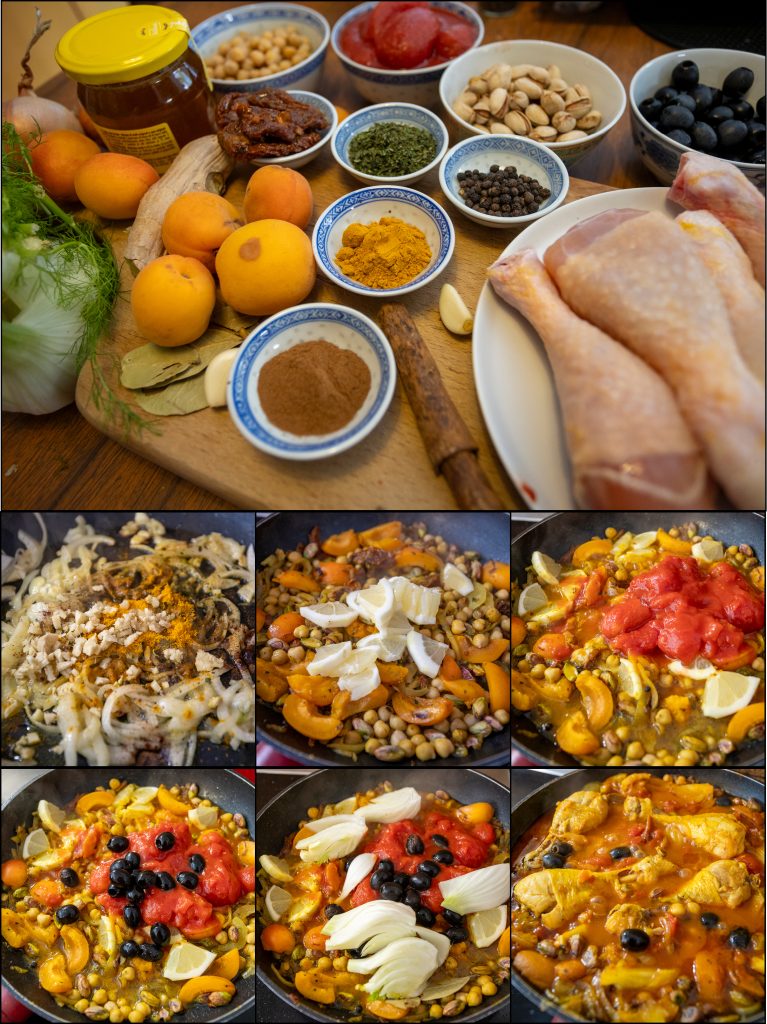
You need bone-in, skin-on chicken thighs, olive oil, a thinly sliced onion, minced garlic cloves, ground cumin, ground cinnamon, ginger, turmeric, cayenne pepper, chicken broth, dried (or fresh) apricots, pistachios, canned chickpeas, a tomato, a fennel head, a chopped lemon, olives, honey, and salt & black pepper to taste. Experiment and see what your taste tells you. You can add raisins, almonds, or any dried fruit.
Just follow one rule: no spice should stand out. They should play together, like a well-rehearsed orchestra.
Salt and pepper the chicken thighs. Heat the oil in a pan and fry the meat until golden brown. Remove the meat, put the onion in the same pan, and sauté until soft. Add the garlic and all the spices. Stir for a minute or two.
Pour in the chicken broth. Add the apricots, chickpeas, pistachios, and lemon. Add the tomato and olives. Chop the fennel head and throw it into the pan. Add a little honey.
Nestle the chicken thighs back into the skillet. If necessary, add a little more broth (or water). Reduce the heat and simmer for another three-quarters of an hour, or until the meat is tender.
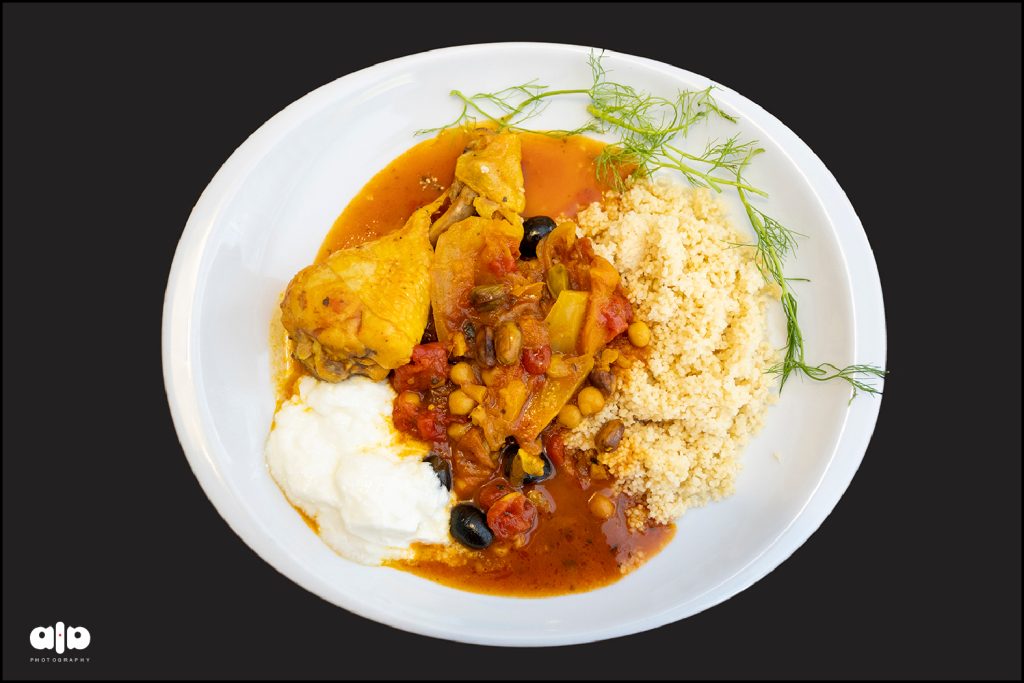
Serve with a spoonful or two of plain yogurt. You can serve it with couscous, or rice if you like. You can also serve it with bread, preferably a fresh French baguette.
And drink a glass of red wine. Moroccan one.
And last but not least, let your imagination run free.