Lost in Istanbul
Whenever I visit Istanbul, I have three absolute must-visit spots. First, a morning Turkish coffee at Hafiz Mustafa in Taksim. Second, the Süleymaniye Mosque, simply because it was designed by the legendary architect Sinan. And third, a walk down to the Ortaköy Mosque—mostly because it’s a bit further out, which helps me get my daily fitness steps in.
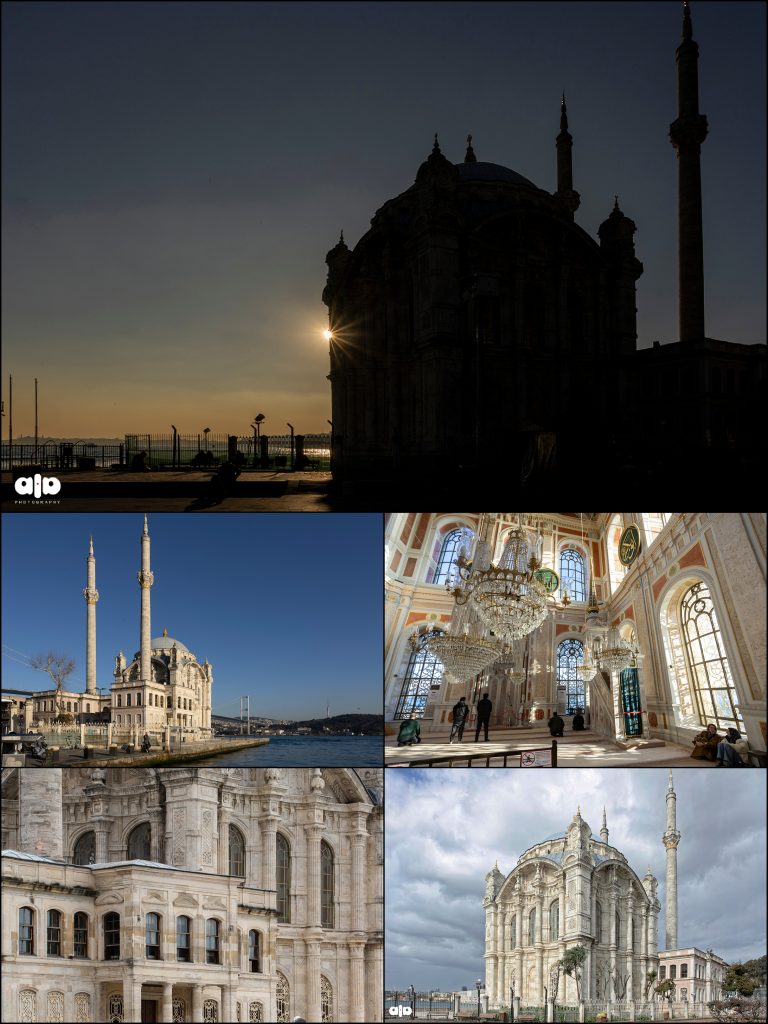
The Ortaköy Mosque sits right on the waterside of the bustling Ortaköy pier square, one of the most vibrant locations along the Bosphorus Strait. Officially named the Büyük Mecidiye Mosque, it was commissioned by Ottoman Sultan Abdülmecid I and completed around 1854 or 1856. The masterminds behind it were an Armenian father-and-son duo, Garabet and Nigoğayos Balyan. They worked as a team and also designed the nearby Dolmabahçe Palace and Dolmabahçe Mosque.
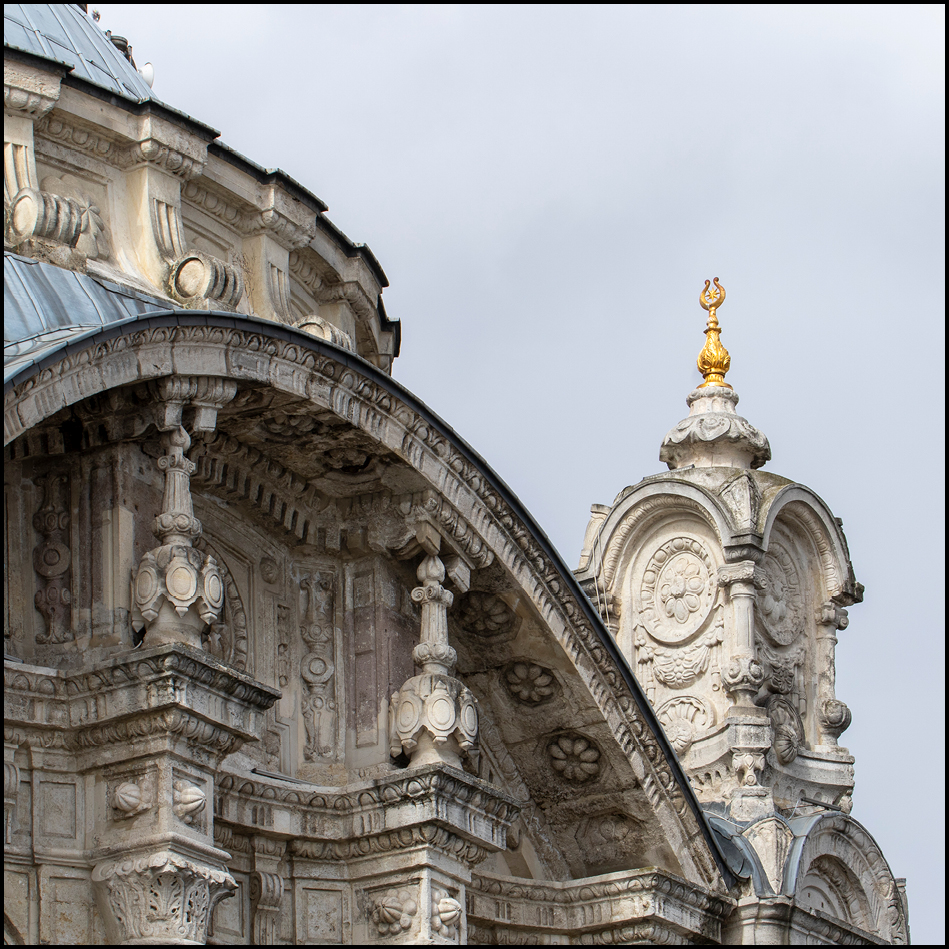
Just like their other major projects in the city, the Balyans designed this mosque in an eclectic, mixed style. They blended contemporary European trends, like Neoclassical, with dramatic elements of the earlier Ottoman Baroque style. What truly sets Ortaköy apart from other mosques of that era, though, is its incredibly intricate, ornate stone carvings on the outside.
So, this past March, I set off on foot late in the afternoon, walking all the way from Taksim along the coastal road. I passed the Beşiktaş Stadium and Dolmabahçe Palace. Then came the Naval Museum, where massive ship anchors stand guard out front. Right next to the museum, there’s a café and a perfumery. My eyes caught a historical plaque bearing the year 1932. It’s the exact year my late mother was born, which made me pause for a second.
On the left side of the road, old photographs from the life of Mustafa Kemal Atatürk are mounted on the wall. I don’t know when they were put up, but I’ve been seeing them there for the last fifteen years. Next, I walked past the ultra-luxury Çırağan Palace Kempinski Hotel. I always wonder how much a single night costs there, and what kind of people sleep inside. There are so many security guards at every corner that you can’t even dream of sneaking into the lobby. They can tell from a mile away if you can’t afford it.
The afternoon sun was scorching, and my legs were getting heavy. I took off my jacket and carried it under my arm. My heavy shoulder bag, loaded with camera equipment, was digging into my skin. A little boy ran past me and muttered something. “Sorry, buddy, I don’t understand Turkish,” I thought. Right behind him was his mother, who explained in broken English that my jacket had slipped out from under my arm and fallen onto the sidewalk. I picked it up gratefully and kept going.
Finally, just one more right turn, and I stepped into the square in front of the mosque.
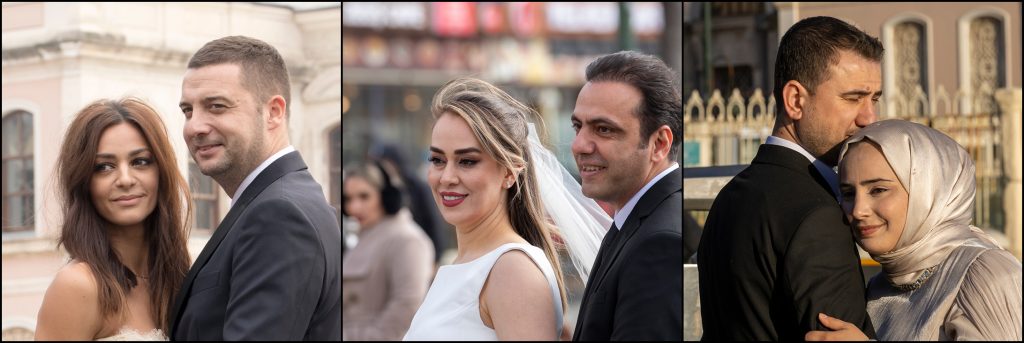
As usual, the place was packed with tourists. Newlyweds were posing for photos, capturing memories to last a lifetime. On the edge of the square, lively stalls were selling coffee, drinks, and baked stuffed potatoes—which the Turks call kumpir. It’s one of Turkey’s most beloved street foods. It always makes me smile because in Slovenian, potatoes are called “krompir”. I actually mentioned this linguistic coincidence to the waiter, but he just stared at me blankly, having absolutely no idea what I was talking about.
Near the entrance of the mosque, a few street vendors were selling souvenirs. Among them, I noticed someone selling Orthodox Christian icons. It made me curious: how would people react if someone tried selling copies of the Quran right outside a major cathedral somewhere in the West?
As compact as the mosque looks from the outside, the interior feels absolutely magnificent. It’s a tall, airy space with two massive rows of windows that flood the entire hall with powerful, natural light.
Like in all mosques, you have to take off your shoes before entering. It got me wondering where this tradition actually comes from. Stepping inside without shoes is one of the most recognizable Islamic practices. It is viewed as a necessary purification of both heart and body, showing the utmost respect and good manners before stepping into a sacred space.
But this custom also has deep, practical roots in hygiene. During prayer, Muslims prostrate, bringing their forehead, nose, and palms into direct contact with the floor. Because the carpet is a place of collective worship, it must remain perfectly clean (tahir). Shoes carry street dirt, dust, and impurities that would defile the prayer space. Taking them off symbolizes leaving the material, external world behind. You consciously cross a threshold from the everyday hustle and bustle into a sanctuary of peace. The tradition even dates back to Biblical and Quranic times. When God spoke to Moses (Musa) at the burning bush, He said: “Do not come any closer. Take off your sandals, for the place where you are standing is holy ground.”
There is also a beautiful sense of human equality to it. When you enter a mosque, everyone—whether you are a wealthy tourist, a local, a king, or a beggar—leaves their shoes outside in identical wooden lockers. Shoes are often a major status symbol. Without them, everyone is exactly the same on that soft carpet.
It made me think about how similar we humans are in our quirks. Foreigners love to make jokes about us Slovenians. Apparently, we are famous for making guests take off their shoes the second they step into our homes. What’s more, we immediately offer them a pair of house slippers! Another joke is that we are the odd ones who always say “hello” when walking into an elevator.
Out on the street, your feet feel the hard, cold stone, and your senses are overwhelmed by the chaotic city noise. But the moment you take off your shoes and step onto the thick, soft carpet of Ortaköy, the sound is instantly muffled. It feels warm under your feet, and the atmosphere immediately washes over you with a deep sense of calm.
Despite my own differing beliefs, I allowed myself to just sit, meditate, and connect with my inner self for a few moments. Then, quietly and with a bowed head, I stepped back out into the noisy world of the street.
Not far away is a city bus stop. I hopped onto a bus that clearly had a “Taksim” sign on the front dashboard. It was evening by now, and the traffic was brutal. The bus was packed to the brim with commuters, students, and a few random tourists. We took a right turn by the stadium. I thought to myself, “Okay, we’re taking a slight detour because Taksim should be straight ahead, and then right, up the hill.” But as we crawled along, the streets grew wider, and we kept heading further north.
Eventually, everything started looking highly suspicious. A young woman got into a heated argument with the driver and stormed off the bus. That was my cue. I approached the driver and asked if we were heading toward Taksim. He obviously didn’t speak a word of English, but his resolute, panicked “No, no, no!” told me everything I needed to know.
He slammed on the brakes, opened the doors for me, and the other passengers all started pointing out the windows, gesturing for me to cross to the opposite side of the street and head back in the completely face-forward direction toward the city center.
It was pitch black outside by then, and in the dark, everything looks completely different. Luckily, the correct bus stop was close by. I waited a few minutes as several buses roared past. Finally, I spotted one with a “Taksim” sign. I thought, “Well, I’ve fallen for this trick once tonight.” Before stepping on, I looked at the driver and asked again: “Taksim?” He nodded. Anyway, I secretly kept an eye on the navigation app on my phone just to be sure. It looked like I was finally on the right track.
Sure enough, I soon spotted the massive silhouette of the new Taksim Mosque in the distance, and shortly after, the Atatürk Monument. I stepped off the bus with a massive sigh of relief and walked toward my hotel. I was finally back in familiar territory.
I stopped at my favorite local spot, the Street Pub, and ordered an Efes beer—which, luckily for me, seems to have a happy hour that lasts all day long.
Right around the corner, after a long, accidental adventure, my hotel bed was waiting for me. Time to finally give my head, and my heavy legs, a well-deserved rest.