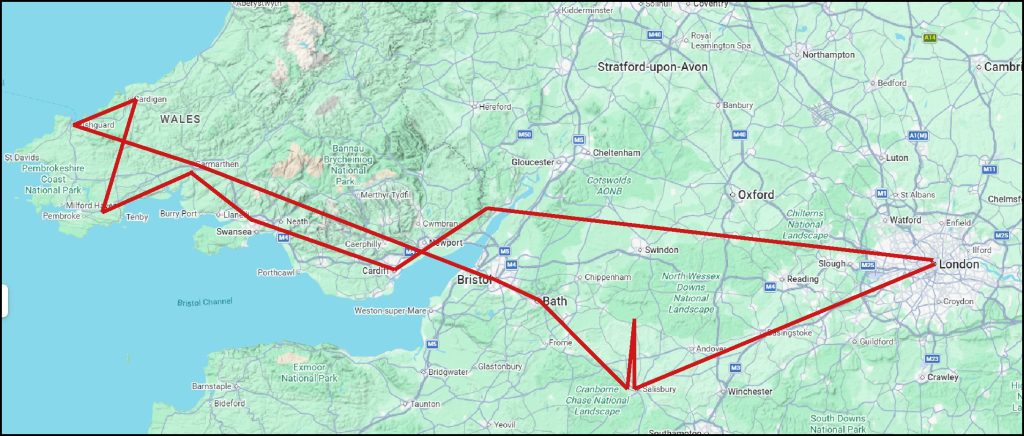
Across Southern England and Wales in the Summer of 1983
Last fall, I wandered around New York. I came across McSorley’s Old Ale House nearby. Supposedly the oldest Irish pub in the city.
Sitting in McSorley’s, I suddenly found myself back in England — or perhaps Ireland. The same low light, the same stubborn wood, the same sense that time had agreed to slow down a bit. Only the accent was different.
By some strange twist of fate, I ended up staying with friends in London, UK, in the summer of 1983.
I somehow made my way from Heathrow to the city centre. Then I changed to the Northern Line underground. All I knew was that I had to get off at the first stop when the underground started to open up to daylight. They would be waiting for me at the station, they said. There they were, newlyweds. Frank hurried off, and Eva told me not to worry, that he just wanted to get to the local pub because the pub would soon close at two in the afternoon. Because we had to have a glass of real English ale right away. And that was my first experience. Beer, almost at room temperature, with no head and poured to the rim of the glass. And of course you had to be careful not to spill it.
The English have been brewing beer since the days when they weren’t quite sure they were English – first the Celts, then the Romans, then anyone with a barrel and some grain. Not to be unfair to the Germans, but maybe the Saxons were first. Or maybe not.
In the Middle Ages, ale was almost more reliable than water, so everyone drank it: from peasants to monks. Later, hops came, modern beer was born, and with it the pub – an institution where world problems, local quarrels, football and thirst were solved.
By 1983, British beer life was almost a national sport: bitter ales, dark milds, local breweries and pubs, where you often got more stories than foam.
Wales was no exception – except that miners, locals and random travelers met in the same pubs over a pint.
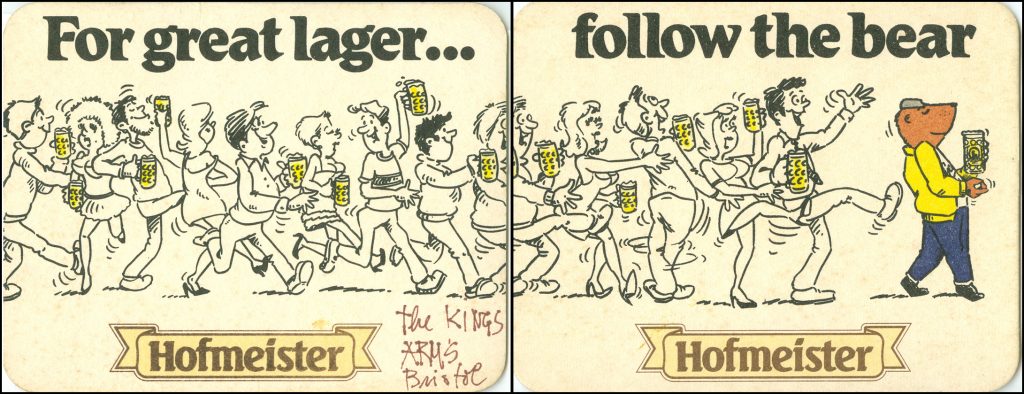
My contribution to this rich history was not brewing, but collecting: I dutifully rescued coaster after coaster from pubs. The name of the pub neatly written on the edge – almost like archaeology, only with a slightly better end to the day.
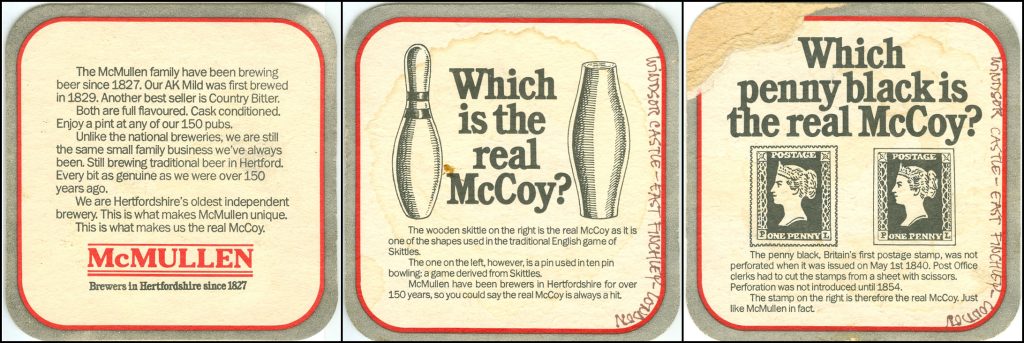
And so it began.
Since I spent two weeks in London first, we naturally went to the local pub Windsor Castle in East Finchley. As a local pub, they had private beer mugs of locals stacked above the counter. I once asked for a beer in a “Kings” mug, but the barman refused until I explained that it was for Chris. The Kings mug, because it had all the English kings written on it, from Arthur on. Apparently, the queens were not mentioned. Seven or eight of them.
Pubs closed at eleven o’clock at night. At that time, the owner rang the bell hanging on the bar. This of course meant that we retreated from the garden and went inside. After fifteen minutes, the bell rang again with an announcement – the last round. By around half past eleven, the bell rang a third time and the owner shouted that now it really is the last round. And Frank said, if it’s the last one, then we should quickly have another beer, and a whisky. Then we went home and sang Slovenian folk songs.
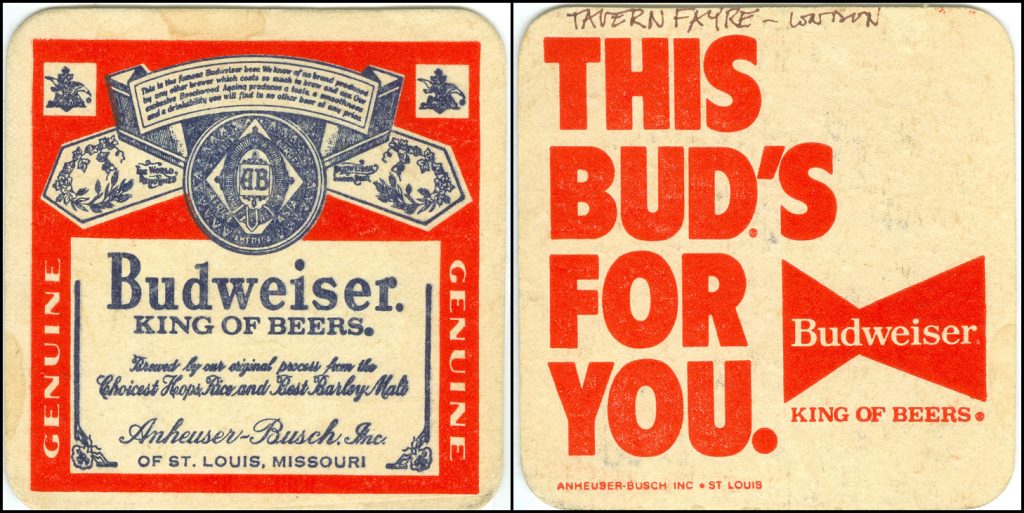
And then the following Monday I traveled to southern England and Wales.
Of course, first I had to see one of the wonders of the ancient world, Stonehenge. There were no entrance fees that year, and there were fewer tourists either. The next stop that fascinated me was the city of Bath. I had learned about it during my architecture studies.
The next day I was stuck in Carmarthen, completely according to the rules of public transport in the eighties – there was no more bus to go by late afternoon. It was the day after my birthday and I accepted the situation as a cultural experience and went to a pub near the B&B. I asked the owner politely if I could buy him a drink. However, some people nearby heard that it had been my birthday and things quickly got out of hand. The drinks kept coming, they wouldn’t let me pay for anything. I woke up the next day with one more beer mat and one proper beer hangover.
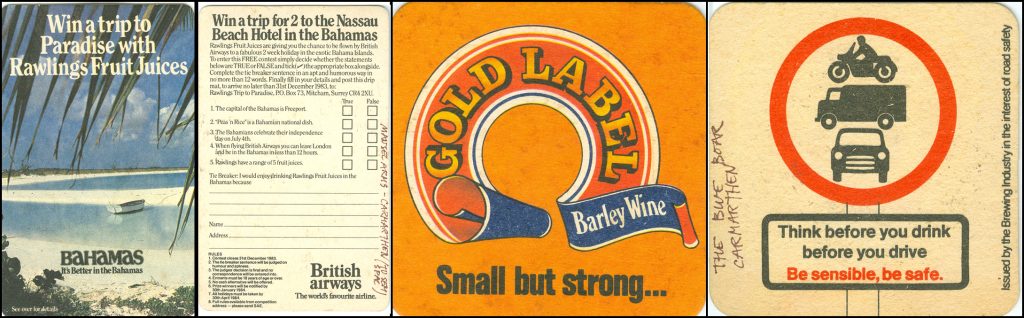
The Blue Boar, Carmarthen
I arrived in Fishguard late in the afternoon. With the help of the tourist office, I found a place to stay and soon went to bed. Since I was staying here for a few days, I naturally discovered quite a few pubs. In one down by the harbour, the owner was a German who had moved here when he retired. Since there weren’t many tourists, after a day or two the locals greeted me on the street. With the obligatory “isn’t it a nice day today?”.
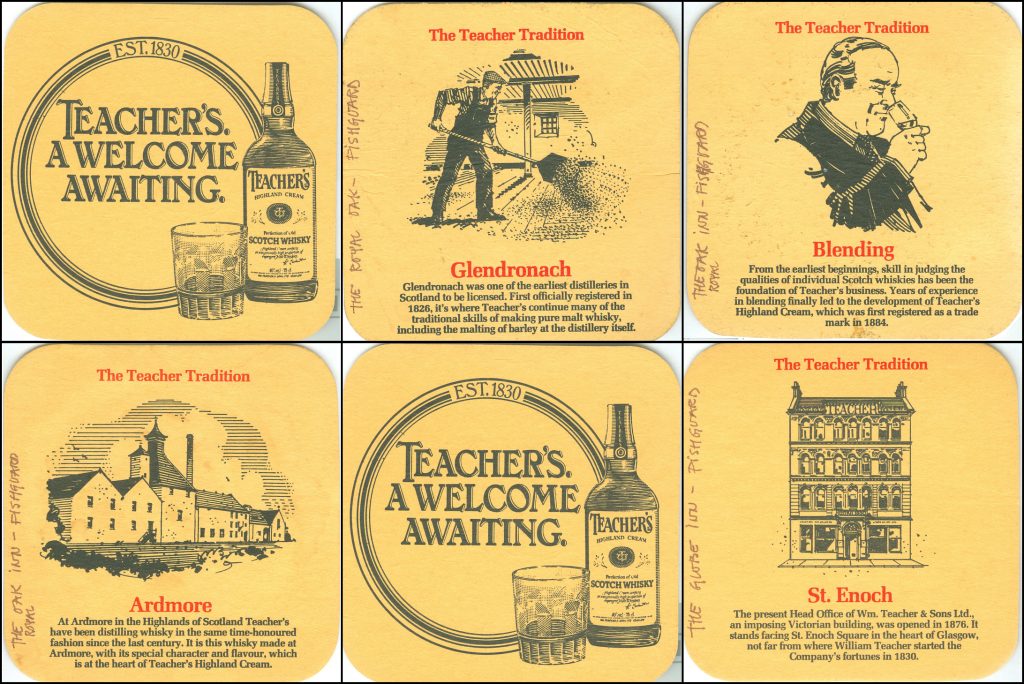
The Globe Inn, Fishguard
At the office where they arranged my B&B, I mentioned that I went to bed early on the first day, and they said, “We know, the landlady told us!”
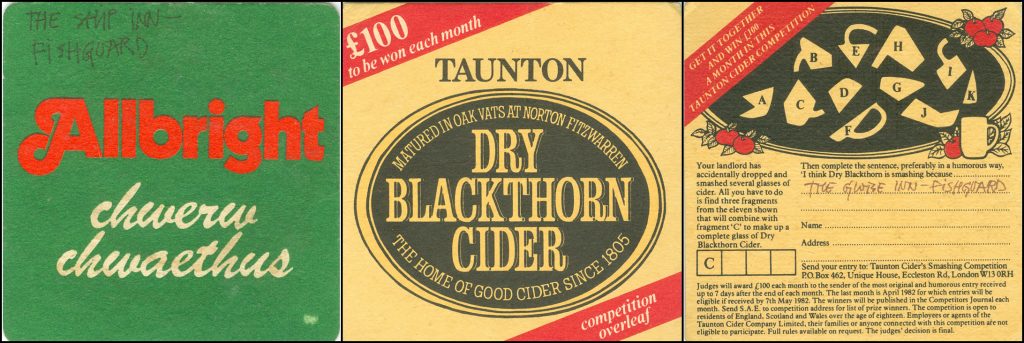
The Globe Inn, Fishguard
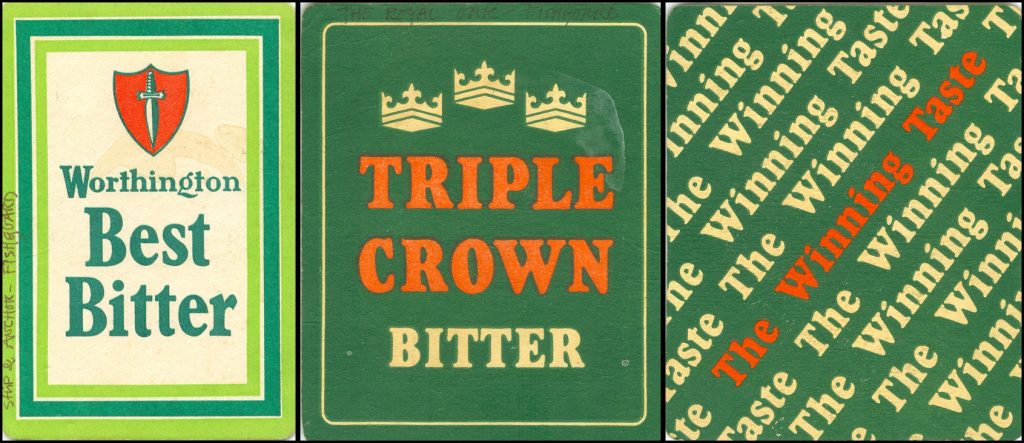
The Royal Oak, Fishguard
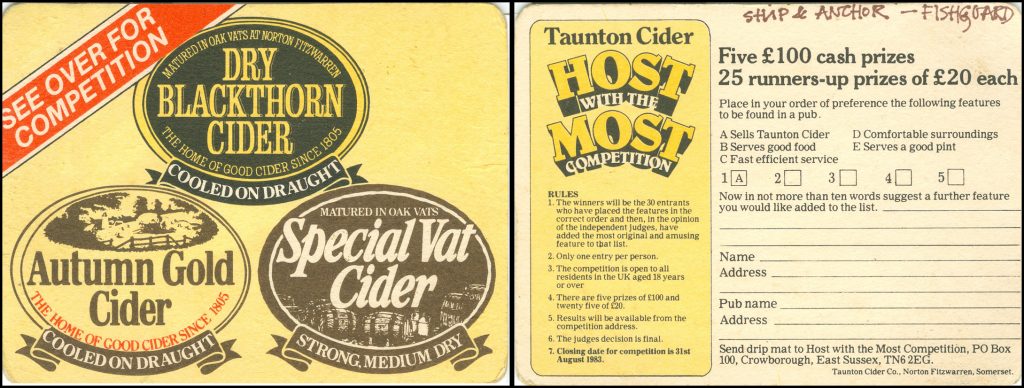
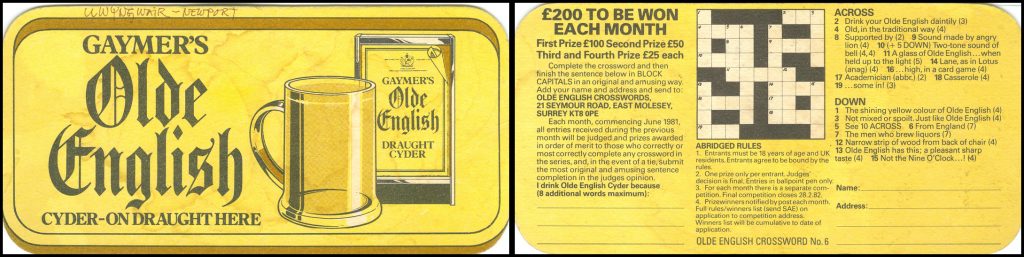
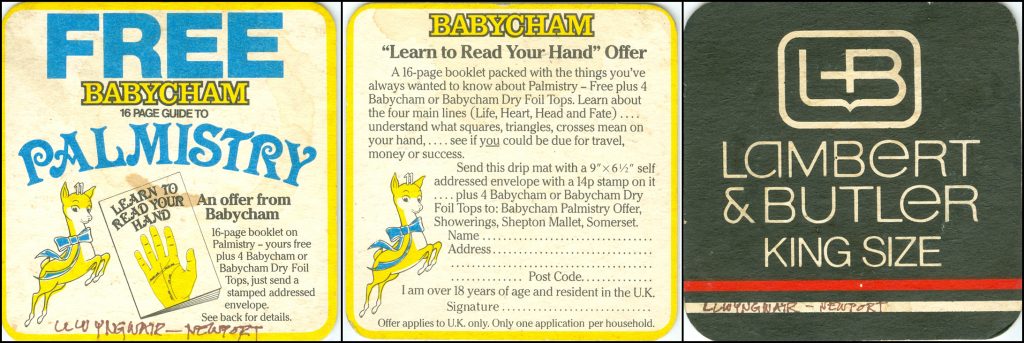
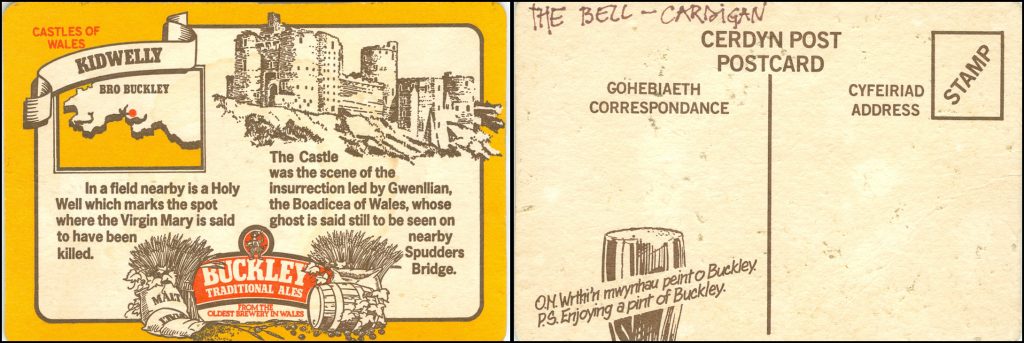
In Cardigan, I argued with the barman. He tells me that I’m the first person he’s met from behind the Iron Curtain. I tell him that if there is an Iron Curtain, it’s on the other side, towards Hungary. In the end, we agreed that Winston was to blame.
After a week, I took a bus along the coast of Wales back to London. And to my almost-home pub, Windsor Castle.
Back then I thought I was collecting souvenirs. It turns out I was collecting stories.