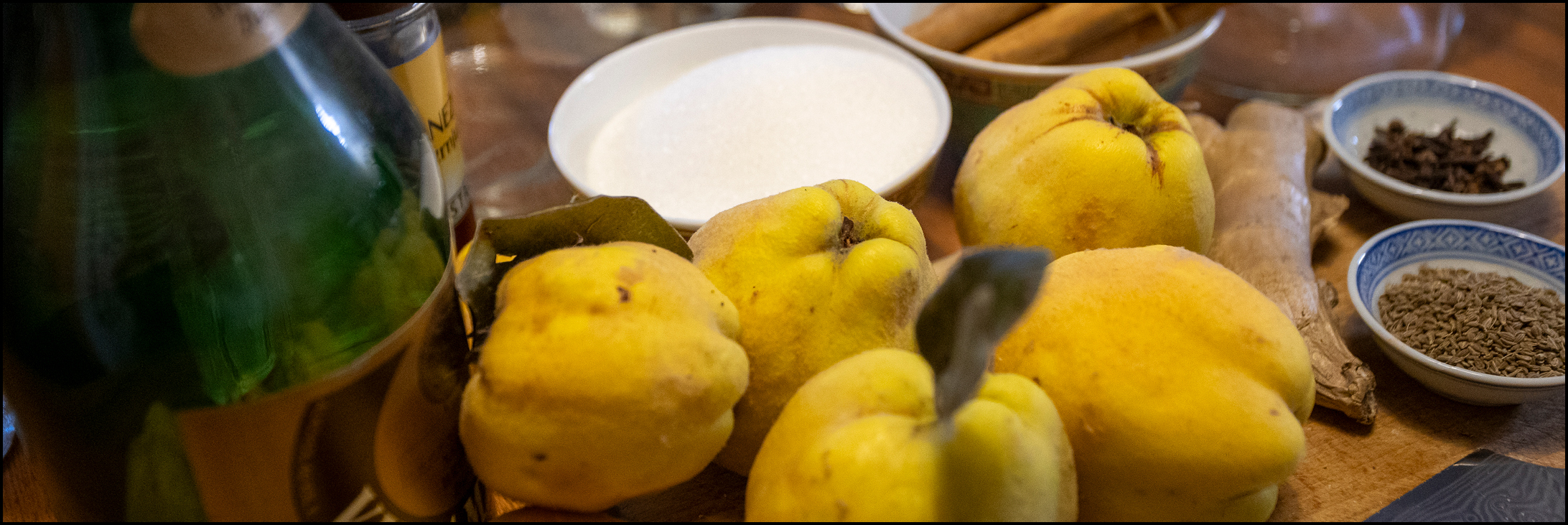
t has been a good twenty years since a legend at Cankarjev Dom—the receptionist—gave me a quince sapling. I planted it on a small plot of land owned by my father. Years passed, and the quince tree finally bore fruit—some years more, some years less.
This year, there was enough fruit to fill one small crate.
Given that I’m getting on in years and becoming increasingly fond of taking it easy—or, to put it bluntly, getting lazy—I spent quite some time wondering what to do with them. I really didn’t feel like making jam; besides, I already wrote about jam back in October 2023. And I certainly didn’t want to use them to make everyday stewed fruit compote.
Well, I could follow my grandmother’s advice and tuck a quince among the laundry to keep it smelling fresh—but I hardly need several kilos of fruit for that.
In the end, I gave up and turned to AI for help. Whatever one might think of artificial intelligence, it offered an interesting suggestion: make quince liqueur.
Alright, let’s do it. It suggested using vodka as a base, but we settled on sadjevec (traditional fruit brandy) instead. A little later, I had another thought: what if I used viljamovka (Williams pear brandy) as the base?
The AI—whatever that might mean in this context—was enthusiastic. We decided to make a dual-variety liqueur, using both viljamovka and sadjevec.
In the meantime, I remembered that I had recently found two two-liter glass jars in the pantry—leftovers from my mother’s estate. They were old, from decades ago. No screw-top threads, no fancy locking mechanisms—just a flared rim over which you stretch cellophane, securing it with a rubber band. Just like they used to do in the old days. I’m getting a bit sentimental here.
So, let’s begin with the preparation.
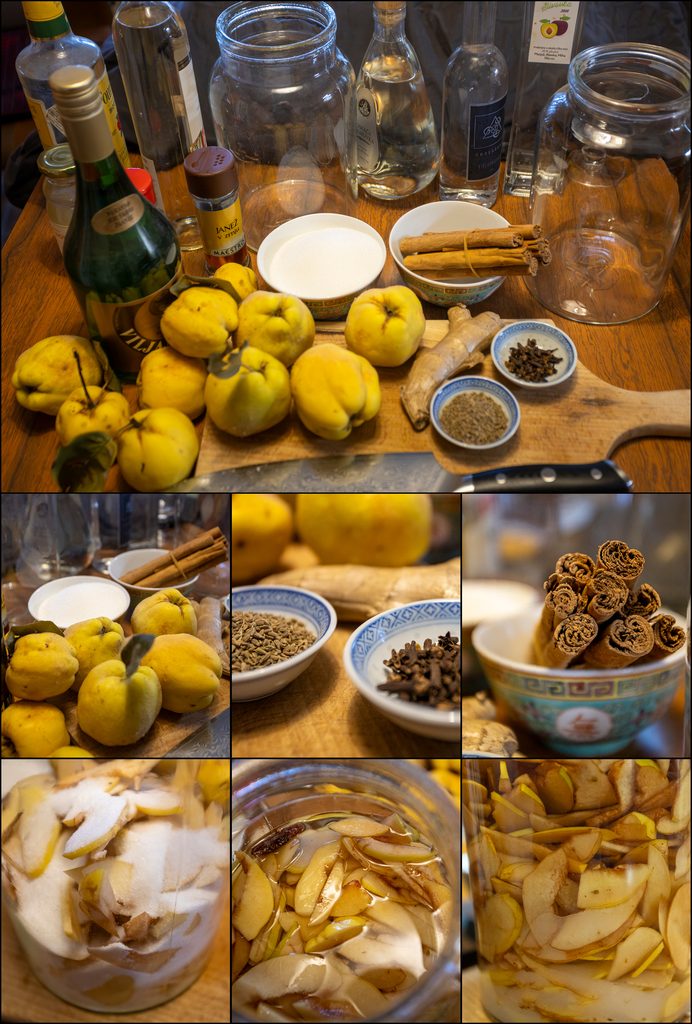
First jar – Fine Pear and Quince Liqueur: Into this jar, add 1 liter of Williams pear brandy, 600–750 g of quinces, 250 g of sugar, 1 cinnamon stick, and half a teaspoon of anise seeds. Do not add ginger or lemon here, so as not to overpower the precious aroma of the homemade pear brandy.
Second jar – Winter-Warming Liqueur: Into the second jar, add 1 liter of fruit brandy, 600–750 g of quinces, 250–300 g of sugar, 1 cinnamon stick, 2 cloves, slices of fresh ginger (about the size of a thumb), and a few anise seeds. Since fruit brandy has a more neutral base, the spices and the zesty ginger will really shine here.
The preparation process is essentially the same for both: wipe the quinces thoroughly with a dry kitchen towel to remove all the fuzz. Do not peel them, as most of the aroma is in the skin. Cut them open, remove only the hard core containing the seeds (the seeds can impart a slight bitterness if left to steep for too long), and then coarsely grate the flesh or slice it as thinly as possible.
Layer the grated quinces and sugar into the glass jars, tucking in the cinnamon, cloves, and anise seeds as you go. Scrape the skin off the fresh ginger using a small spoon or a knife, slice it thinly, and add it to the second jar.
Once the jars are filled to about two-thirds of their capacity, pour a liter of spirits over the contents. The fruit must be completely submerged.
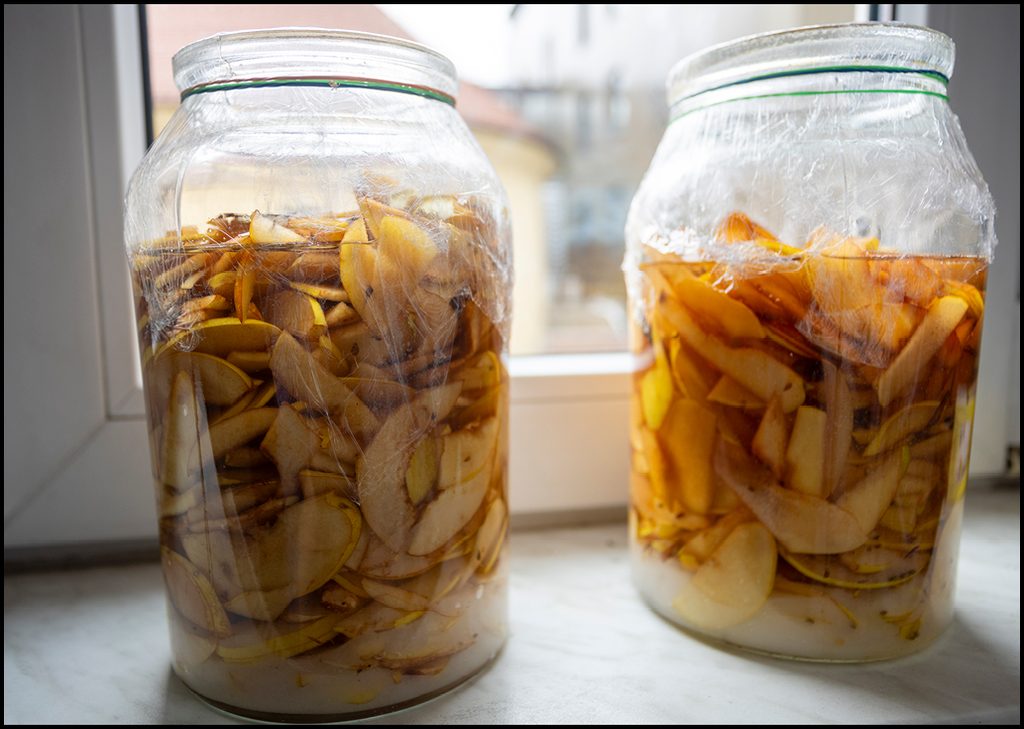
Once the liqueur has taken on a beautiful golden-amber hue, strain it. First, pass it through a regular strainer to remove the quinces and spices, then strain it again through fine cheesecloth or a coffee filter to ensure the liquid is crystal clear. Squeeze the quinces in the strainer firmly to extract every last drop of juice.
The liqueur is ready to drink immediately, but if left to rest for another month in a dark pantry, the flavors will mellow and blend even better.
One final tip: don’t throw away the quinces after straining the liqueur! Since they are infused with spirits and spices, they are fantastic for use in an apple strudel or as an addition to the batter for a festive sponge cake. But more on that during the Christmas holidays…
And last but not least, let your imagination run free.