When a roadside stop in the Arizona desert crosses paths with the Dixie Mafia.
Raise your hand if you haven’t read Mario Puzo’s The Godfather—or at least seen the movie starring Marlon Brando. And who hasn’t heard of the New York Mafia families? Or Al Capone? Listening to and reading about all this, one might get the impression that America is riddled with crime. Well, in a way, it is.
When I first visited New York back in 1977, I took a walk through Little Italy. Naturally, countless stories from movies and TV series about the Italian Mafia crossed my mind. It was a cold February day—gloomy, with low-hanging clouds and snow threatening to fall. The streets were uncomfortably empty. The wind blew ominously around the corners. Perhaps it was just my imagination, but I constantly felt as though someone might come sprinting around a corner at any moment—bloodied—with a few dark, mustachioed Italians in pursuit, guns in hand.
Especially considering that my friends Alta-Ann and Alan had advised me the night before not to walk around the city after ten o’clock. They wouldn’t even let me take a taxi back to my hotel after midnight. But that was before Giuliani.
Of course, nothing of the sort happened, but I quickened my pace nonetheless and left that “dangerous” area behind.
A few years later, I was traveling by Greyhound bus through the southern United States, along historic US Route 80—the mother of Arizona highways. It was February then, too, but the day was sunny and full of hope. I was on my way from Phoenix, Arizona, to San Diego in Southern California. Who wouldn’t be full of anticipation in those youthful days? California, here I come!
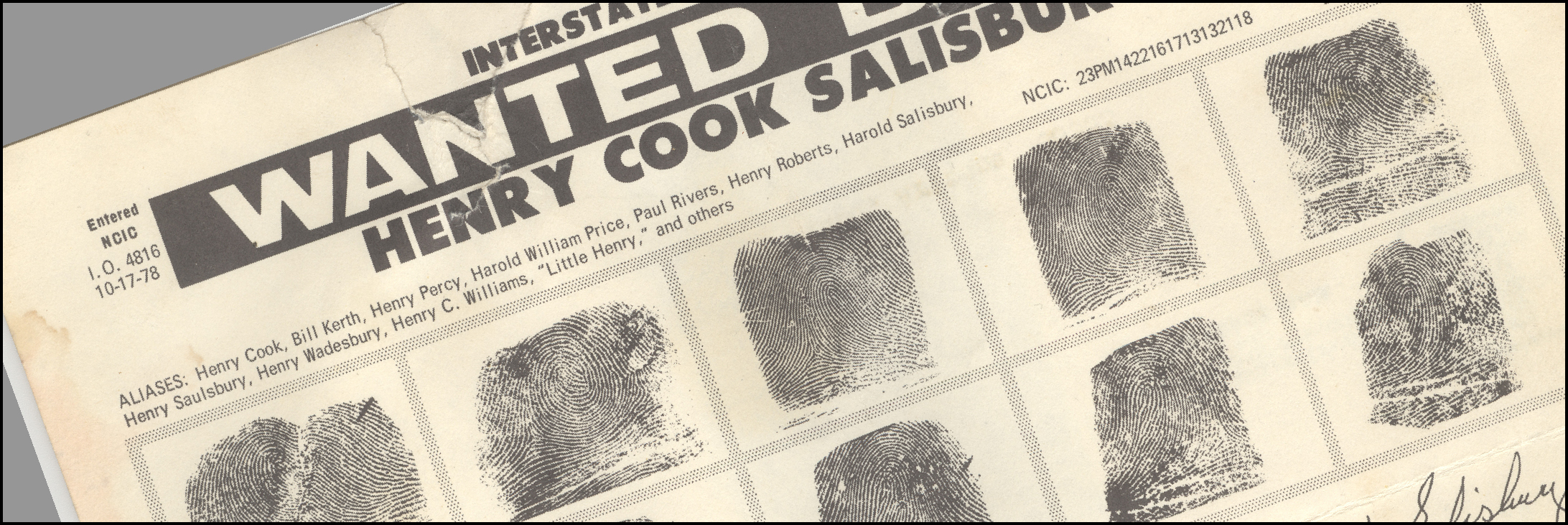
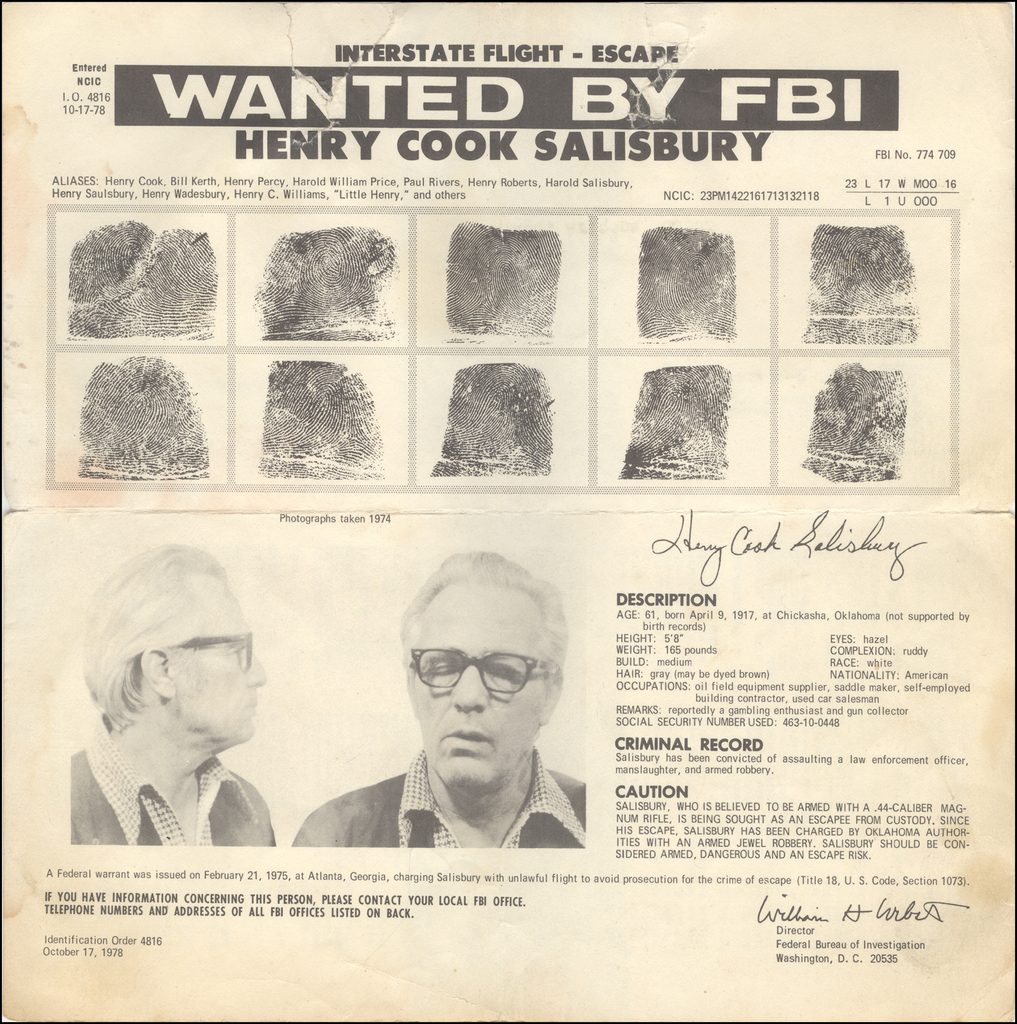
Somewhere halfway there—still in Arizona—the bus stopped for a short break. Dateland, a small settlement with a tiny post office. On the wall in the waiting area, I noticed a bulletin board displaying a few FBI wanted posters. I couldn’t help myself; I tore one of them off and slipped it into my pocket. Well, naturally, I felt a bit of a chill later when I noticed the inscription: “Official business / Penalty for private use, $300.” I hope the statute of limitations has expired on that “crime” after nearly forty-five years.
And so, we come to the Mafia. It originated in Sicily, and the name itself is said to be of Arabic origin. After all, in case you didn’t know, Sicily was under Arab rule from the ninth to the eleventh century. The name “Mafia” first appeared in the title of a play in 1863: I mafiusi di la Vicaria.
Informally or generally, a mafia is any of various criminal organizations that include, or bear a strong similarity to, the original Sicilian Mafia, the Italian-American Mafia, or other Italian organized crime groups.
Later, it spread across half of Italy, and subsequently to North America with Italian migrants—particularly to the New York area. Now you know why I walked through the Italian quarter with a certain amount of fear.
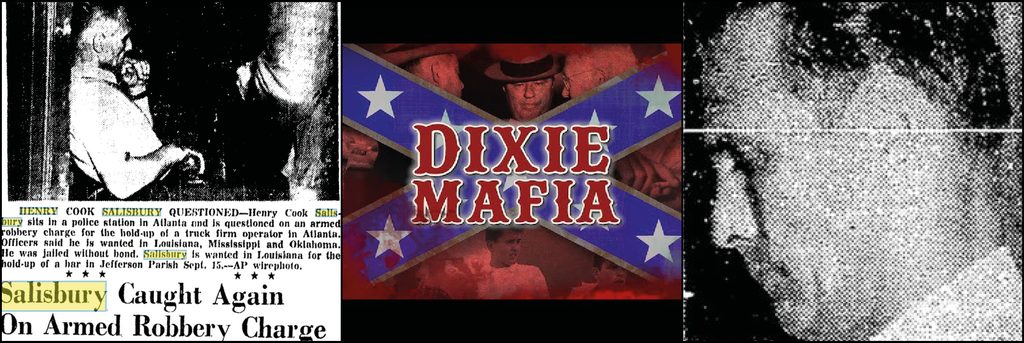
Of course, the Mafia didn’t remain limited to New York. Among other places, it also appeared in the American South, becoming known as the Dixie Mafia—with the main difference being that there were almost no Italians in it, only Southerners. Hence the nickname “Dixie.” The roots of southern criminal syndicates trace back to the post-World War II era. Unlike the traditional Mafia families rooted in major northern metropolitan centers, southern criminal networks formed around opportunistic partnerships, family ties, and transient associations. According to some sources, they are considered successors to the criminal groups that emerged after the end of the Civil War.
Among them was Henry Cook Salisbury (April 9, 1917 – June 12, 1984), also known by his criminal aliases “Little Henry” or Henry Williams. He was a notorious American career criminal with a 50-year criminal record spanning at least 35 arrests. He was heavily associated with the Dixie Mafia, a loose, floating network of criminals operating across the southeastern United States that specialized in armed robbery, burglary, and contract killings. He was one of the original members from the 1960s. As can be seen from the warrant, he had been convicted of assaulting a law enforcement officer, manslaughter, and armed robbery.
Back in 1941, he was sentenced to ten years in the State Penitentiary for armed robbery. While serving a seven-year sentence in Fulton County, Georgia, for attempted murder, car theft, possession of burglary tools, and criminal trespass, Salisbury managed to escape from jail on February 3, 1975.
After more than seven years on the run as a federal fugitive—during which time he was also wanted for an armed jewelry store heist in Oklahoma—the FBI finally tracked the 65-year-old Salisbury down. He was arrested on June 14, 1982, while hiding out at a campground near Slidell, Louisiana. He surrendered to agents without resistance.
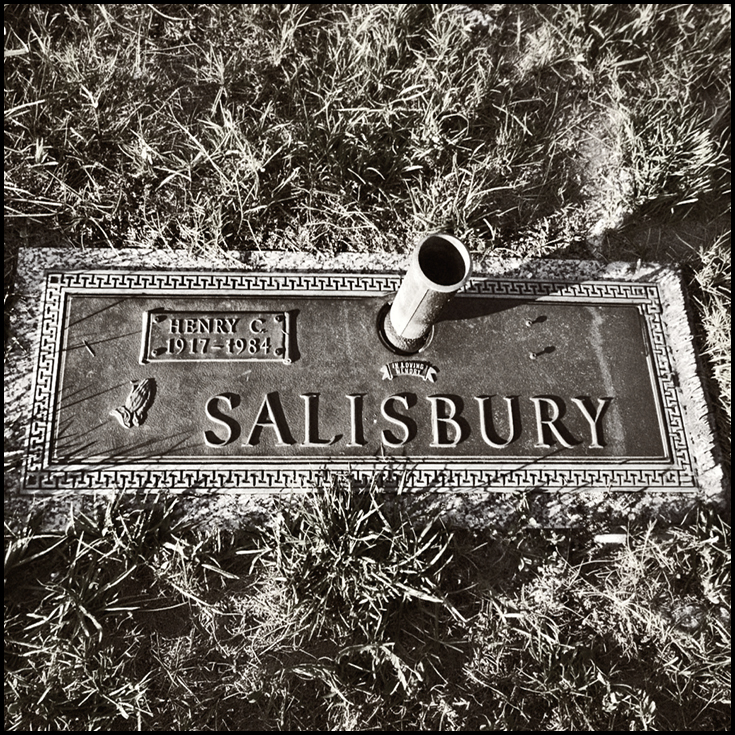
Salisbury passed away two years later, in June 1984, and is buried at the Southern Memorial Park in Biloxi, Mississippi.
Let me be clear: this brief text is not intended as a tribute to a criminal, but rather as a recollection of my journey through the American South.
While moving, I found this wanted poster in an old cardboard box. It made me wonder who this Henry actually was. One naturally asks what circumstances drive a person down such a path. In this context, the Great Depression in the U.S. is worth mentioning. In addition to the economic crisis, Oklahoma was devastated by the Dust Bowl ecological disaster. Many families lost everything, and young people from impoverished backgrounds often saw crime as the only way to survive and make quick money.
Once he entered the system—receiving a ten-year prison sentence following a 1941 robbery—Salisbury was exposed to the brutal prison environment of the era. At the time, prisons functioned as “universities for criminals.”

By the time Salisbury reached adulthood, the so-called Dixie Mafia had emerged in the American South. For someone with an existing criminal record, such a network offered protection, logistics (hideouts, forged documents), and steady sources of “work.” Once a person becomes part of such a circle, leaving is nearly impossible, as evading the long arm of the law becomes their only way of life.
Salisbury’s path is thus a classic example of how early poverty, family dynamics, and institutionalization can transform a young boy into an incorrigible career criminal who spent more than fifty years on the wrong side of the law.
Let’s end on a lighter note. The year after I returned from the U.S., I sent New Year’s greetings to my friends using a copy of that wanted poster—I simply changed the name and the photograph. Unfortunately, no copy of “my wanted poster” has survived.
Henry’s original, however, commands a high price among collectors.