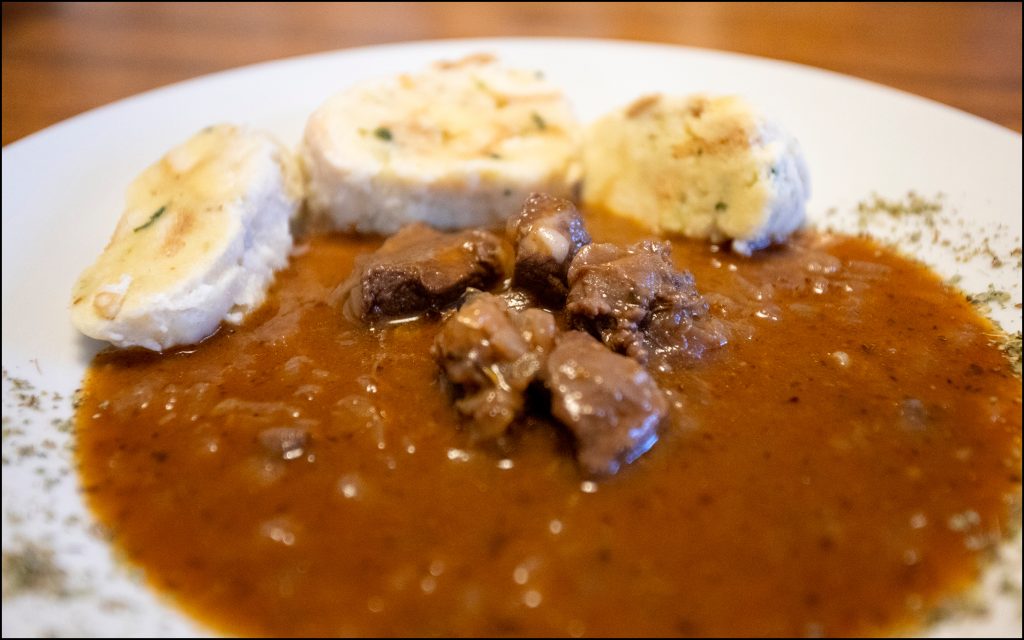
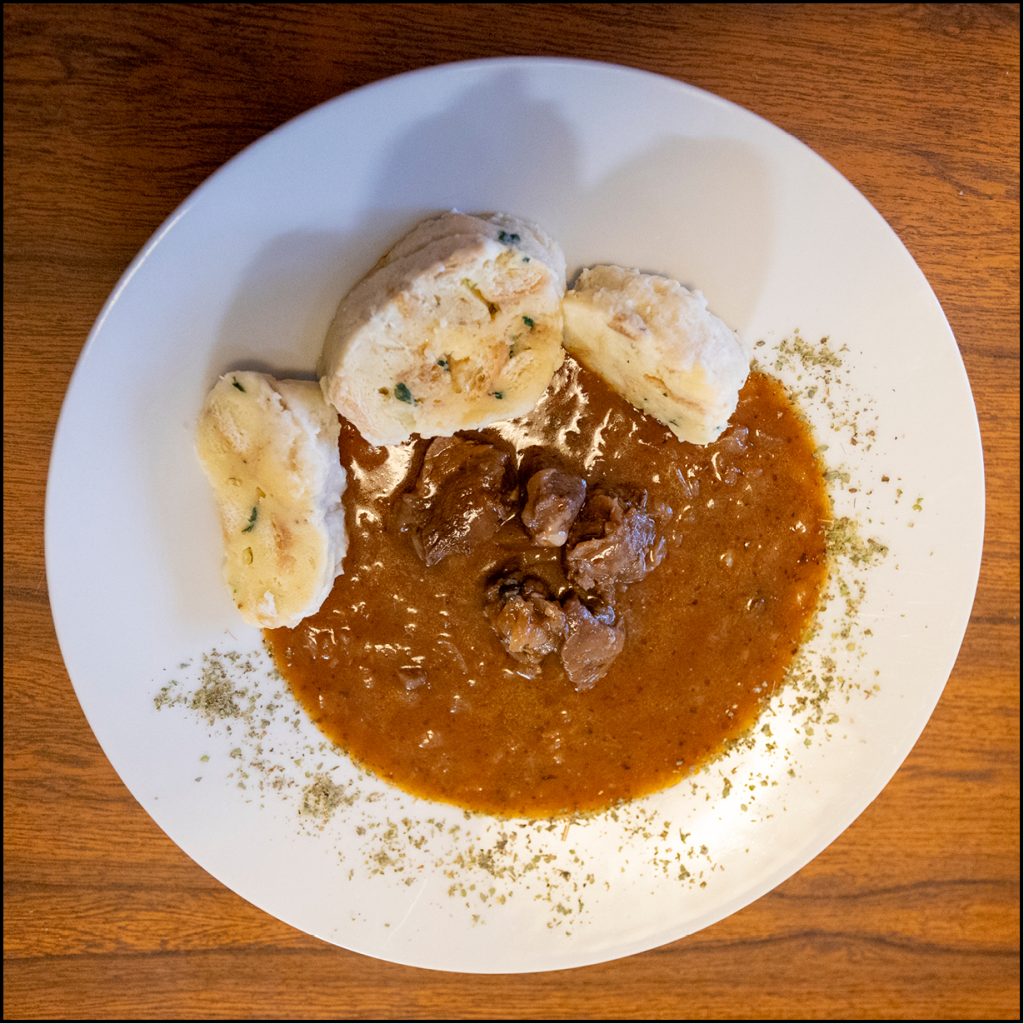
So, when we have already prepared bread dumplings, it would be fine to also use them as a side dish to something. And what better way to go than with goulash. And if there is a goulash, let it be a goulash made from wild boar meat.
Psst, for dumplings see the previous post …
So we said wild boar.
The wild boar (Sus scrofa), also known as the wild swine, common wild pig, Eurasian wild pig, or simply wild pig, is a suid native to much of Eurasia and North Africa, and has been introduced to the Americas and Oceania. The species is now one of the widest-ranging mammals in the world, as well as the most widespread suiform. It has been assessed as least concern on the IUCN Red List due to its wide range, high numbers, and adaptability to a diversity of habitats. It has become an invasive species in part of its introduced range. Wild boars probably originated in Southeast Asia during the Early Pleistocene and outcompeted other suid species as they spread throughout the Old World.
With the exception of domestic pigs in Timor and Papua New Guinea (which appear to be of Sulawesi warty pig stock), the wild boar is the ancestor of most pig breeds.
Apicius (Apicius, also known as De re culinaria or De re coquinaria (On the Subject of Cooking), is a collection of Roman cookery recipes, which may have been compiled in the fifth century AD, or earlier) devotes a whole chapter to the cooking of boar meat, providing 10 recipes involving roasting, boiling and what sauces to use.
But we used a fairly classic goulash recipe.
And what is goulash anyway?
Goulash is a meal made of meat and vegetables seasoned with paprika and other spices. Originating in Hungary, goulash is a common meal predominantly eaten in Central Europe but also in other parts of Europe. It is one of the national dishes of Hungary and a symbol of the country. The name originates from the Hungarian gulyás. The word gulya means ‘herd of cattle’ in Hungarian, and gulyás means ‘cattle herder’ or ‘cowboy’. Over time the dish became gulyáshús (‘goulash meat’) – a meat dish which was prepared by herdsmen.
Today, gulyás refers both to the herdsmen, and to the soup or stew.
In Slovene partizanski golaž, “partisan goulash”, favored by Slovenian partisans during the Second World War, is still regularly served at mass public events. “Partisan goulash” uses onion in equal proportion to meat; two or more types of meat are usually used in preparing this dish. The most widespread form of goulash in home cooking is a thick beef stew that is most commonly served with mashed potatoes.
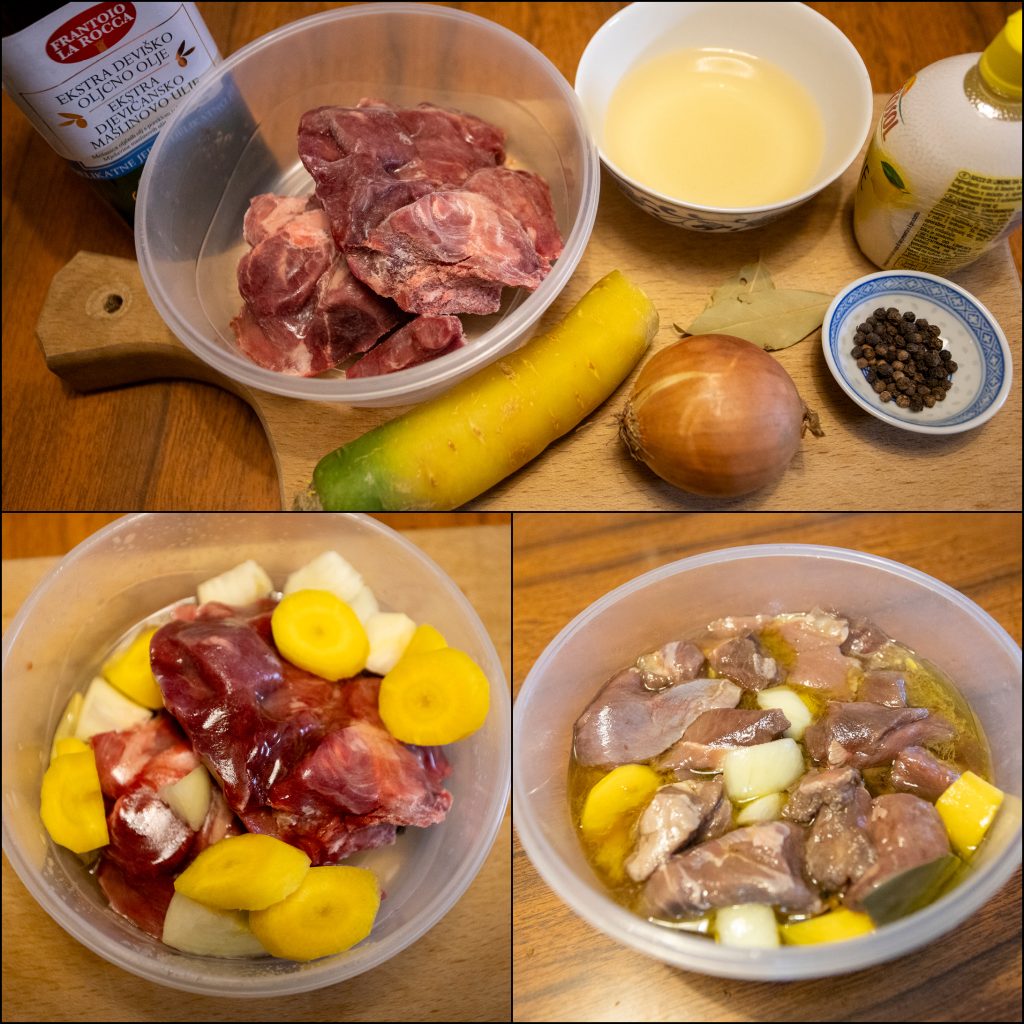
So we need wild boar meat, the same amount of onion, spices – rosemary, juniper berries, bay leaf, salt, red pepper, tomato paste, cumin, 1-2 deciliters of dry red wine, a tablespoon or two of flour.
Since venison usually has a strong taste and smell, we marinate it overnight.
For the marinade, we need oil, vinegar, onion, yellow carrot, juniper berries, bay leaf, lemon.
Cut the meat into pieces of any size. Put it in a bowl and make a marinade from the listed ingredients. The oil and vinegar should be about 1 dl in total. Peel the yellow carrot and cut it into rings, as well as the lemon, and the onion into larger pieces. Mix and let it stand in a closed container in the refrigerator overnight.
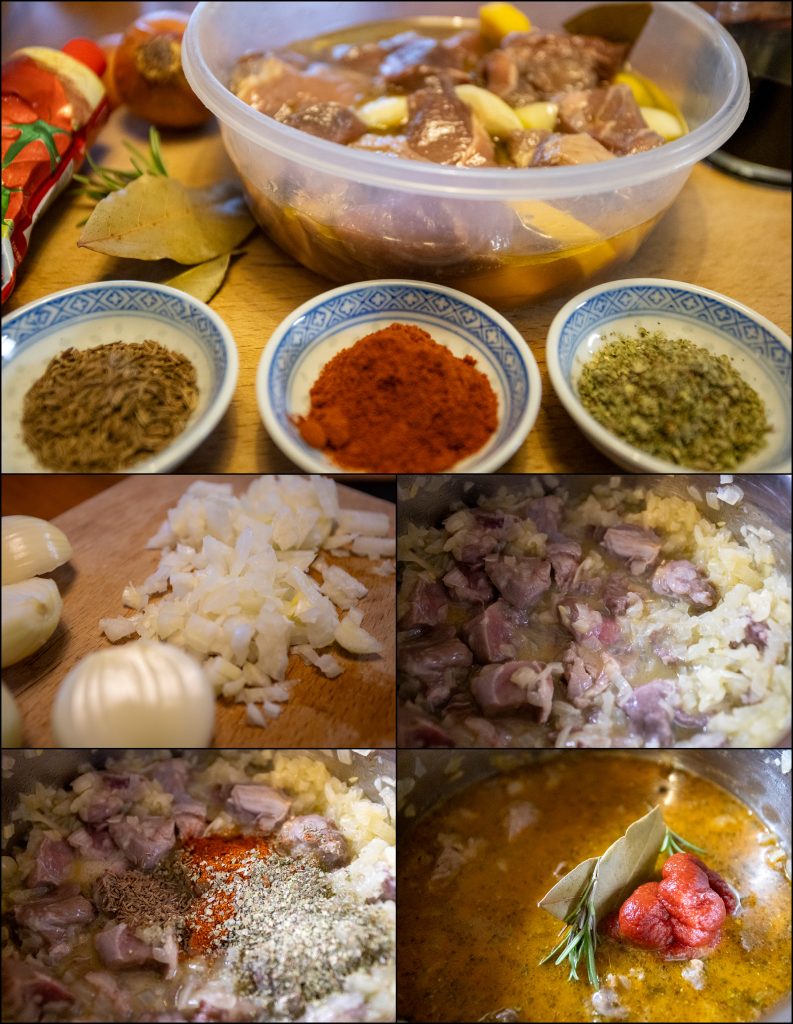
Finely chop the onion and fry it in oil. Simmer the meat over low heat (about an hour). Add a sprig of rosemary, juniper berries and bay leaf. Of course, remove all the spices from the marinade from the meat. Simmer everything together until soft.
When all the liquid has boiled, sprinkle with flour and red pepper, fry and pour in enough water to cover the meat. Season with salt and cumin. Wait for it to boil and cook, covered, for about half an hour to 45 minutes. 15 minutes before the end, pour in the wine.
Serve with a side dish, in our case bread dumplings.
And last but not least, let your imagination run free.